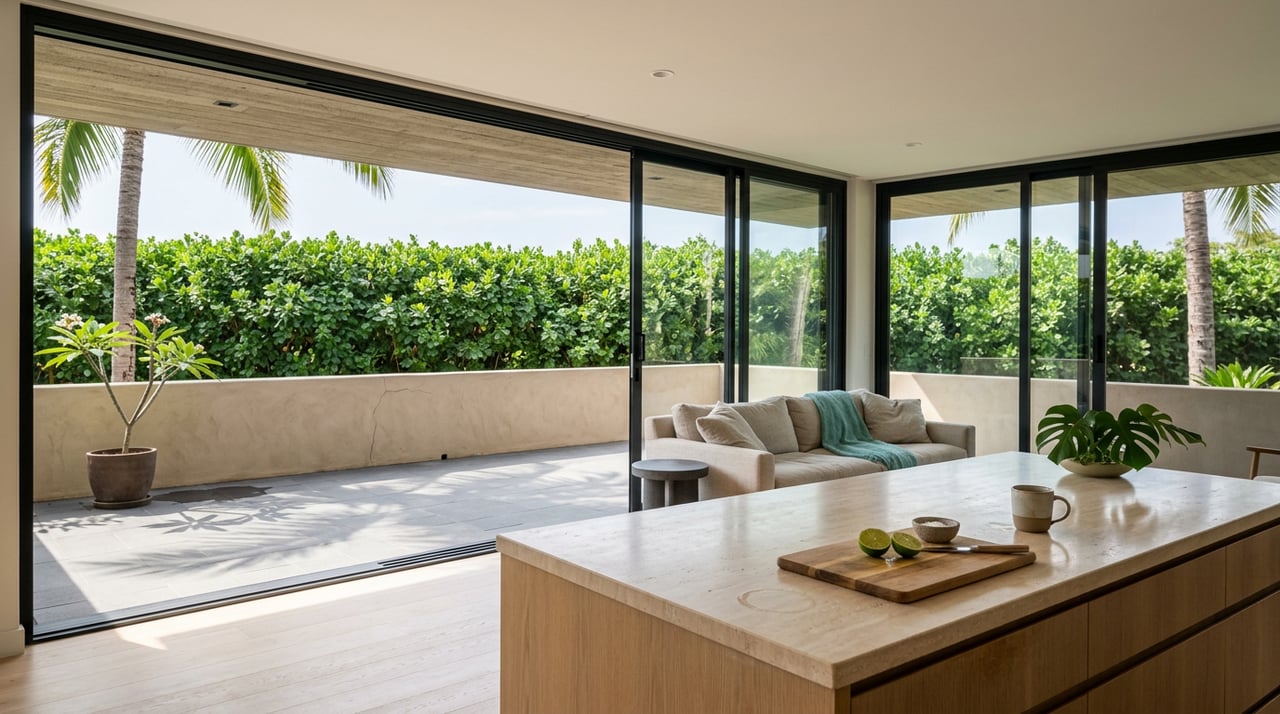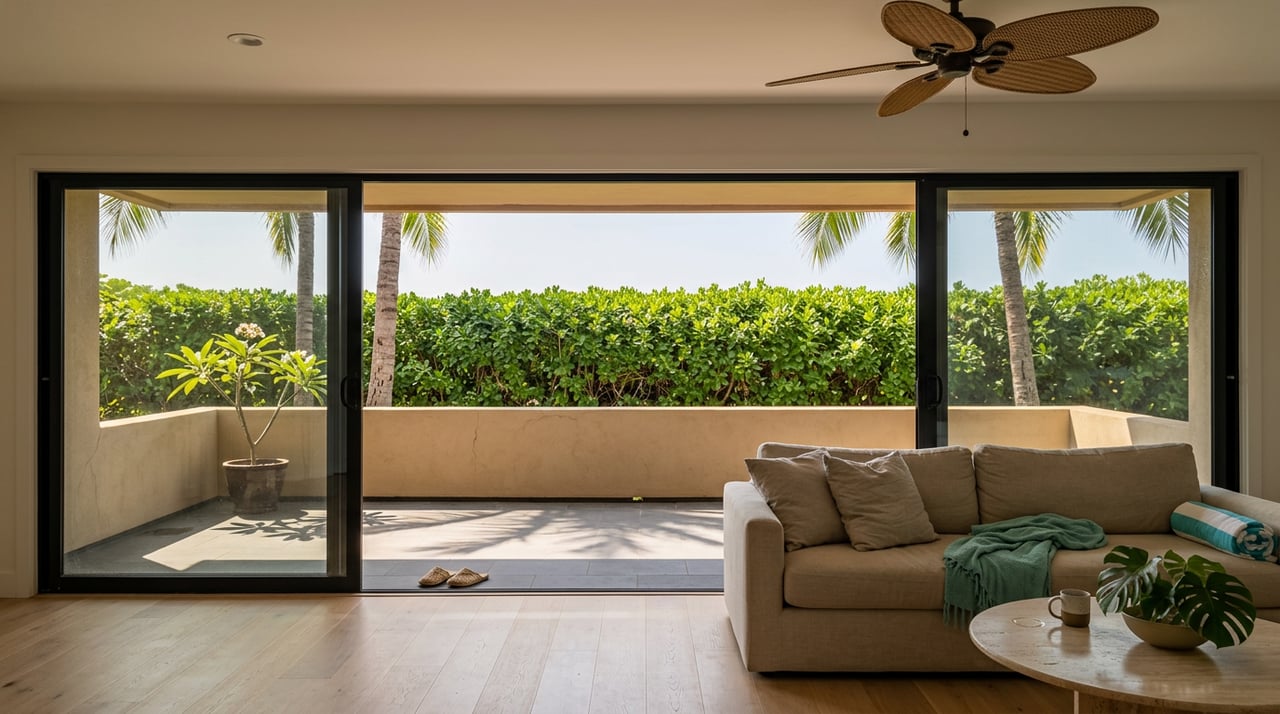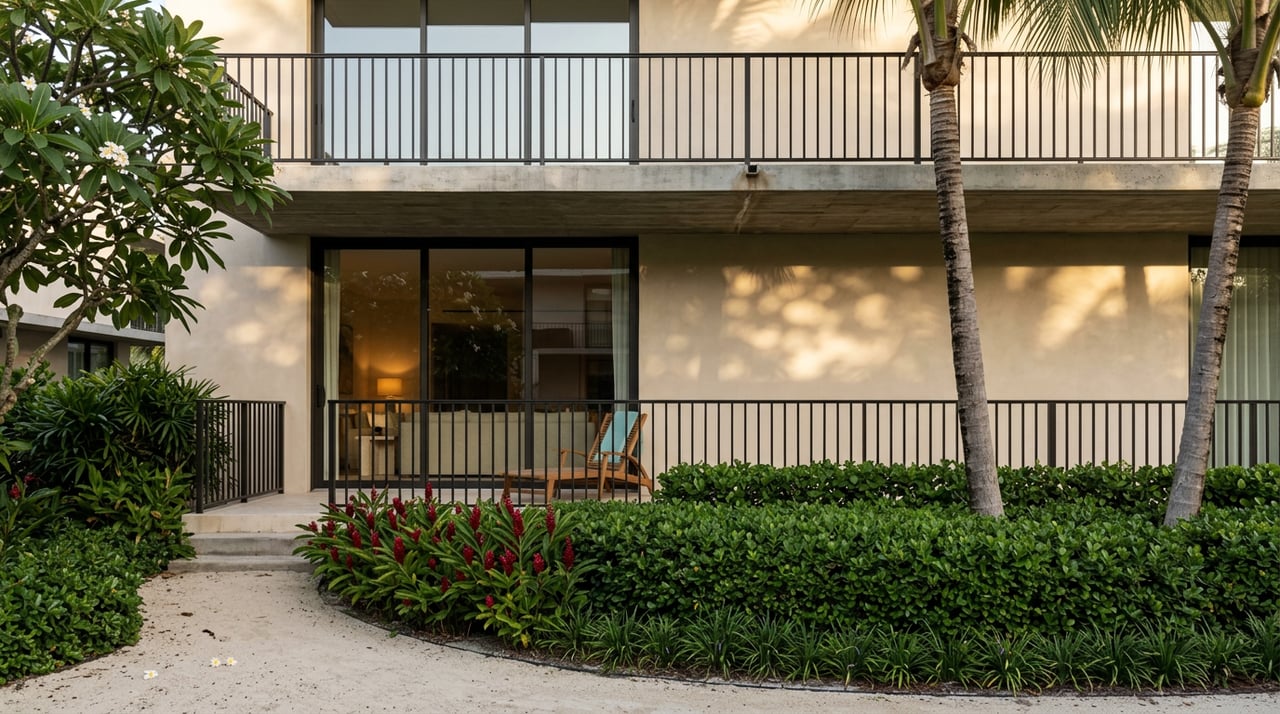
Two units at the same Kaanapali address, similar floor plans, similar views, list within a few percent of each other. On paper, they look like the same asset. They aren't. One is fee simple. The other is a leasehold interest with a rent reset in 2029 and a surrender clause in 2043. The pricing engine treating them as comparable is the same engine that produces the West Maui median condo figure of $699,000 for 2026, a number that is essentially flat year over year and hides two different balance sheets behind one median.
If you are comparing Kaanapali condos from a distance, this is the mechanism the portals cannot show you. The listing photos are honest. The MLS tenure field is honest. What the sticker price does not tell you is the schedule of repricing events already written into the deed.
The document that explains the price gap
In Hawaii, condominium ownership comes in two shapes. Fee simple means you own the unit and an undivided share of the land beneath the building. Leasehold means you own the improvements, and the land underneath belongs to a separate lessor who collects ground rent under a master lease. The lease sets a term, a rent, a schedule for renegotiation, and a surrender clause that returns the improvements to the lessor when the lease ends.
At Kaanapali's founding in the 1960s, local landowners partnered with developers and retained the land, granting long-term leases to condominium buyers. Kaanapali Alii, The Whaler, and Kaanapali Royal all started this way. Over time, the fee interest was offered for sale at each of those buildings, and some owners bought in while others did not. The result today is that a single Kaanapali complex can contain both fee simple and leasehold units side by side, priced according to two different sets of assumptions.
About 8 percent of Maui condo listings on the market in early 2026 were leasehold. The visible price gap between comparable fee simple and leasehold units on Maui can run from roughly 25 percent to 60 percent, widening as the remaining lease term shrinks. That discount is not a bargain. It is a compressed spring.
A Kaanapali reset calendar
The relevant dates for a 2026 buyer are not the lease expirations. They are the interim renegotiation windows, because those are where the ground rent, and therefore the monthly carry, can jump.
| Complex | Ownership mix | Next rent renegotiation | Lease expires |
|---|---|---|---|
| Maui Eldorado | Leasehold, 10% AOAO fee interest | 2029 | End of 2043 |
| The Whaler on Kaanapali Beach | Mixed FS and LH | 2029 or 2036 depending on unit | Varies by interval |
| Kaanapali Alii | Mixed FS and LH | Varies by unit | Varies by unit |
| Kaanapali Royal | Mixed FS and LH | Varies by unit | Varies by unit |
| Kaanapali Shores | Mostly FS, small LH cohort | Varies by unit | Varies by unit |
The pattern to read out of that table is not the individual dates. It is that a buyer signing a 30-year mortgage in 2026 on a leasehold Maui Eldorado or Whaler unit will hold the loan through at least one full ground-rent reset and, in some cases, straight into the surrender year. Under the standard Hawaii lease formula, the new ground rent is calculated as the appraised unencumbered land value multiplied by a preset interest rate. West Maui land values have moved considerably since the last reset. That appreciation flows through the reset math and lands in the owner's monthly statement.
The 35-year cliff, quietly moving toward you
The market's second repricing event is not written into the lease at all. It sits in lender underwriting. Most Hawaii lenders require the remaining lease term to exceed the mortgage term by at least five years. A 30-year loan therefore needs 35 years or more remaining on the lease at closing. A leasehold Kaanapali unit that expires at the end of 2043 crosses that 35-year line in 2009 in reverse, meaning the 30-year conventional mortgage door closed on those units years ago. By the early 2030s, even 15-year money begins to require careful lender-by-lender conversation. The financeable buyer pool contracts to cash and short-amortization loans, and the price adjusts to whoever is still in the room.
A parallel line sits inside the tax code. A leasehold interest with 30 years or more remaining is treated the same as fee simple for a 1031 exchange. Once you drop below 30 years, that treatment falls away, and any investor buyer who was planning to exchange out is off the table. That threshold arrives in 2013 for a 2043 lease. It is already here.
The leasehold discount is not the price of owning less. It is the price of holding a schedule of known repricing events. Read the schedule, then price the discount.
Where Bill 9 stacks on top
For any Kaanapali condo that also depends on short-term rental income to pencil, there is a second layer of uncertainty. Bill 9, the Maui County proposal to remove short-term rental rights from roughly 7,000 apartment-zoned condominiums, has weighed on West Maui condo values for close to two years. Buildings zoned Hotel remain protected. Buildings zoned A-2 apartment, including a share of the Kaanapali resort corridor's inventory, sit inside the proposed footprint.
Layer that on a leasehold structure and the outcomes multiply. A leasehold, apartment-zoned Kaanapali unit facing a 2029 rent reset is exposed on three axes at once: the ground rent could rise, the STR income could disappear, and the lender pool could shrink as the lease shortens. A fee simple, hotel-zoned unit in the same complex carries none of those. That is the real explanation for the price gap. It is not a discount. It is a probability-weighted invoice.
West Maui inventory sat at roughly 15 to 20 months of supply across residential and condo segments through spring 2026. That is a buyer's market by any conventional definition, and it is also the environment in which lease-aware buyers can negotiate for the reset risk rather than pay for the sticker.
What buyers actually ask for before writing an offer
The Kaanapali condo where the numbers work is almost never the one that looks best on the portal. It is the one whose file survives due diligence. A short list of what to request in writing:
- The recorded master lease, in full, including any recorded amendments and extensions.
- An estoppel letter from the lessor confirming current ground rent, upcoming reset dates, arrears, and any pending notices.
- The AOAO's most recent budget, reserves study, and any recorded language about how ground rent flows through assessments.
- The lease's ground-rent reset formula, in plain language, plus the last two reset outcomes if available.
- The mortgagee protections in the lease: subordination, attornment, estoppel rights, and assignment rules that a lender will need to see.
- The building's zoning designation on the Maui County tax map and its current STR permit status.
- Confirmation from at least two Hawaii-based lenders that the specific unit is financeable at the terms you are underwriting.
Any Kaanapali buyer working from the mainland should also expect the loan officer to be local. First Hawaiian Bank, Bank of Hawaii, and Central Pacific Bank all underwrite leasehold routinely. Most mainland lenders do not.
FAQ
Is a leasehold Kaanapali condo ever the right buy? For a five to ten year horizon in a specific complex, with cash or a short-amortization loan, and with the reset formula priced into the offer, yes. The lifestyle math can work when the ownership horizon fits inside the next renegotiation window and the buyer is not counting on 1031 flexibility on exit.
Do fee simple owners at these buildings pay ground rent? No. When a unit's fee interest was purchased, that unit's owner acquired the land share and no longer owes ground rent. The building can still contain leasehold neighbors paying the lessor each month. HOA fees remain shared across both.
How does the AOAO's partial fee interest at Maui Eldorado change the picture? The 10 percent fee interest held through the AOAO gives the association a seat at the table in future extension talks and a partial ownership position that flows through unit values. It does not eliminate the lease. It softens the negotiating posture at reset and expiration.
Why is the West Maui condo median still flat while single-family homes have dropped? Condos in West Maui are 71 percent of the transactions year to date in 2026, and the median for the segment sat near $699,000, effectively unchanged year over year. Single-family homes moved a different direction because they are a different asset with a different buyer. Averaging them together obscures the story. Reading the condo segment on its own, and then splitting it further into fee simple versus leasehold and hotel-zoned versus apartment-zoned, is where the price signal lives.
Kaanapali rewards buyers who read the documents before they read the view. If you are weighing two units at the same address, or comparing a Kaanapali condo against a fee simple option in Wailea or Kapalua, the numbers on the portal are the beginning of the conversation. The lease, the zoning, the reset calendar, and the lender's willingness to underwrite the specific unit are where the real price is set. I would rather walk you through those pages together than watch you sign an offer built on the sticker. When you are ready to compare notes, Rai Morimoto is here to help. Let's connect.