You are sitting across the table with a resale package in front of you. Somewhere around page six, past the pool rules and the pet policy, is a line that says the reserve fund is 50 percent funded. It reads like a passing grade. Most buyers glance at it, nod, and move on to the lanai photos.
That line is where the real due diligence starts, not where it ends.
In Kihei, where much of the condo stock went up in the 1970s and 1980s along Kihei Road and South Kihei Road, that 50 percent figure can mean two completely different things depending on which funding method the association chose. One building at 50 percent is on solid ground. Another building at 50 percent is one broken elevator motor away from a five figure bill mailed to every owner. The resale package will not tell you which one you are looking at. You have to ask.
Two Legal Ways to Be "Funded," and They Are Not the Same
Hawaii Revised Statutes Chapter 514B-148 gives every condominium association two paths to compliance, and both are perfectly legal.
Under the percent-funded method, an association only has to collect and hold at least 50 percent of what its reserve study says the building will eventually need to replace roofs, repaint exteriors, or repipe plumbing. Under the cash-flow method, the law requires 100 percent funding, calculated as a rolling 30-year projection designed to never dip below zero.
Here is the part that catches buyers off guard. A building using the cash-flow method at 100 percent can hold a smaller cash cushion in real dollars than a building using the percent-funded method that reports a lower headline number. The math depends entirely on how the reserve study defines the fully funded balance and how conservative its cost estimates are. Two boards can look at the same aging roof and arrive at very different dollar figures for what "fully funded" even means.
| Funding Method | Statutory Minimum | What It Actually Tells a Buyer |
|---|---|---|
| Percent-Funded | 50% of estimated replacement reserves | Compliant does not mean healthy. Many reserve professionals treat 70% or higher as the level where special assessment risk drops meaningfully. |
| Cash-Flow | 100% of a 30-year projection | Sounds safer, but the underlying projection assumptions (material costs, useful life estimates) determine whether that 100% is generous or thin. |
The law does not require associations to disclose which method they use in plain language on a listing sheet. You have to pull the actual reserve study, or ask the managing agent directly, to find out.
Why This Matters More in Kihei Right Now Than It Did Three Years Ago
Reserve funding has always mattered on Maui. What changed is the insurance layer sitting on top of it, and that layer has moved fast enough that a reserve study from 2023 is already describing a different market than the one a Kihei buyer is closing into in 2026.
Following the August 2023 wildfires, Hawaii's condo insurance market tightened sharply. Reinsurers based outside the state, who have no obligation to Hawaii regulators, raised rates in response to statewide risk, and some associations saw hurricane premiums climb 300 to 900 percent within a year or two. A handful of buildings could not find full replacement coverage at any price.
The state responded. Governor Josh Green signed Act 296, also known as Senate Bill 1044, on July 8, 2025. The law reactivated the Hawaii Hurricane Relief Fund, dormant since the years following Hurricane Iniki, and expanded the Hawaii Property Insurance Association's authority to write coverage when the private market will not.
The relief that reactivation offers is real, but it is narrower than the headlines suggest. To qualify for HHRF coverage, an association has to be turned down by at least two state-licensed insurers, and the fund only covers losses above a $10 million threshold. It is excess coverage, not a replacement for a primary policy. A smaller Kihei low-rise with a total insured value well under $10 million may not be eligible at all, which means it is still negotiating entirely on the open market where premiums have not fully settled.
State Senator Jarrett Keohokalole, who chairs the Senate Commerce and Consumer Protection Committee, has called the underlying issue a "silent crisis that's pushing thousands of residents to the brink." That framing matters for a buyer because the crisis does not announce itself on a listing page. It shows up quietly, in a maintenance fee that jumped 40 percent at renewal, or in a board meeting minute mentioning a special assessment vote that has not happened yet.
What This Looks Like on the Ground in Kihei
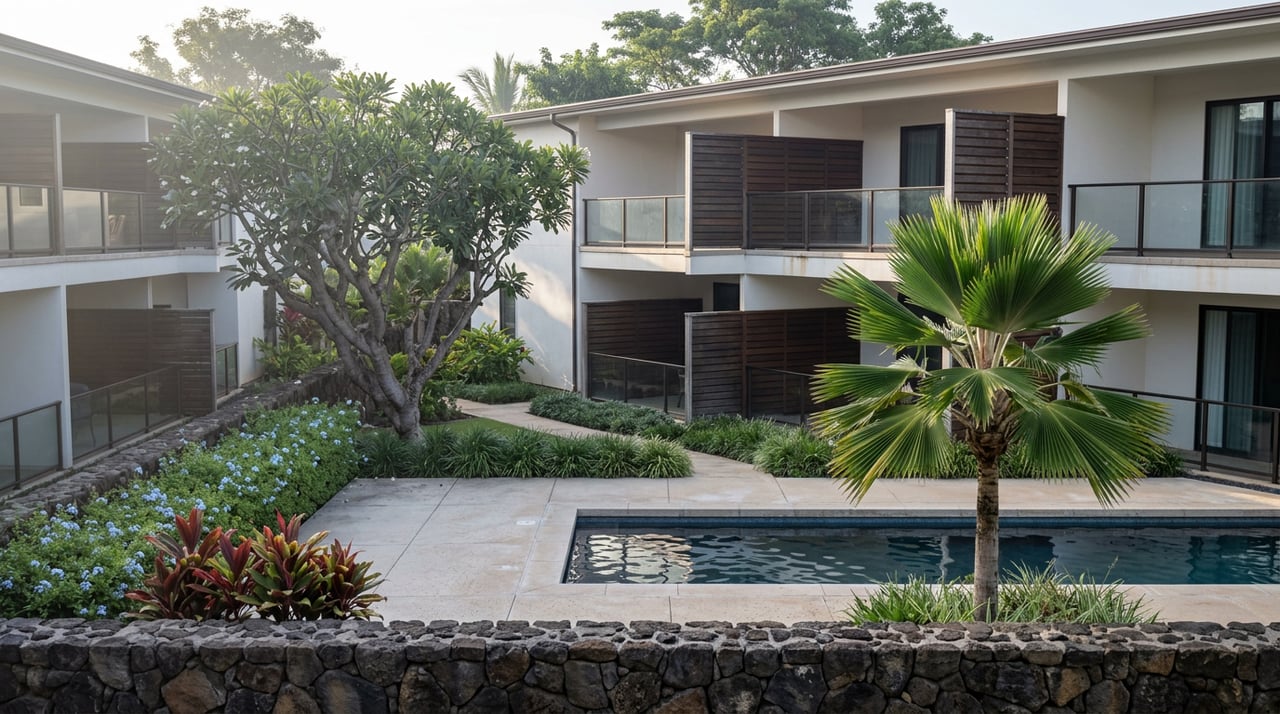
Kihei's building stock skews older and closer to salt air than newer resort-zoned developments in Wailea or Kaanapali. Salt exposure accelerates corrosion in railings, fasteners, and the rebar inside concrete, which shortens the real-world lifespan of components a reserve study assumed would last another decade. Some associations, like Kihei Shores, have required owners to carry an individual HO-6 policy since January 2013, specifically because a master policy alone was never enough to cover unit interiors beyond original construction. That kind of rule is a signal the board is thinking seriously about coverage gaps, and it is worth noticing which buildings have made that shift and which have not.
There is also a financing consequence buyers underestimate. Fannie Mae and Freddie Mac require full replacement value coverage before they will purchase a mortgage on a unit in a given building. If a Kihei association cannot secure 100 percent coverage and is patching the gap with expensive surplus lines policies, conventional lending on units in that building can dry up, which pushes the buyer pool toward cash buyers only. That, in turn, can suppress resale values in ways that have nothing to do with the unit itself.
Five Documents to Request Before You Waive Any Contingency
- The current reserve study and its funding method. Ask specifically whether the association uses the percent-funded or cash-flow approach, and what percentage it currently reports.
- The last two to three years of board meeting minutes. Special assessment votes, insurance renewal discussions, and deferred maintenance debates surface here long before they hit a listing description.
- The master insurance certificate. Look at the coverage limit against the building's estimated replacement cost, not just the premium amount, and check the hurricane deductible structure.
- The current operating budget and most recent financial statement. This shows whether reserve contributions are keeping pace with the study's recommendations or falling behind.
- Confirmation of HHRF status, if applicable. If the building has applied for or received Hawaii Hurricane Relief Fund coverage, ask when that coverage began and what primary insurance sits beneath it.
Hawaii law requires reserve studies to be reviewed or updated by an independent professional at least once every three years. If the copy in your resale package is older than that, treat it as outdated information rather than a current picture of the building's finances.
The Question That Cuts Through the Paperwork
If you only ask one thing before you write an offer, ask this: "What percentage funded is the reserve, under which method, and has the board discussed a special assessment in the last two years?" A straight answer to that question tells you more about your real cost of ownership than the list price ever will.
This is not a substitute for a licensed attorney or CPA reviewing the governing documents on a specific transaction, and Kihei's buildings vary enough that generalizations only go so far. What holds true across almost all of them is that the reserve study and the insurance certificate deserve the same scrutiny buyers usually reserve for the home inspection.
FAQ
Does Hawaii require condo associations to be 100 percent reserve funded? No. The statutory floor is 50 percent under the standard percent-funded method. Only associations that choose the cash-flow method are required to fund at 100 percent of their 30-year projection.
Does every Kihei condo qualify for Hawaii Hurricane Relief Fund coverage? No. HHRF only applies to associations with a total insured value above $10 million that have already been denied hurricane coverage by at least two state-licensed insurers. Smaller buildings may not be eligible.
Can a special assessment affect my ability to get a mortgage on a Kihei condo? Yes. Lenders review a building's financial health, including reserve funding, insurance coverage, and delinquency rates, before approving a loan. A building without full replacement coverage can lose access to conventional financing entirely, which limits the buyer pool to cash offers.
How often does Hawaii law require a reserve study to be updated? At least once every three years, reviewed by an independent reserve professional. If your resale package includes an older study, ask the managing agent for the current version before relying on the numbers in it.
If you are weighing a condo purchase in Kihei and want a second set of eyes on a resale package before you commit, Rai Morimoto is happy to walk through it with you. Let's Connect.